Overview
Petra developed as a Nabataean capital at the meeting point of important trading routes. Its architecture combines buildings assembled from stone with monuments cut directly into cliffs. Tombs, temples, streets and waterworks belong to a much larger urban landscape than a single photograph can suggest.
Trade, empire and change
The city prospered through trade in products including incense and spices. Rome incorporated the Nabataean kingdom in AD 106, and Petra continued under Roman rule. An earthquake in AD 363 damaged much of the city. Its longer history reflects changing trade routes and communities as well as these dramatic political and natural events.
Engineering in an arid landscape
Channels, cisterns, reservoirs, tunnels and diversion dams helped capture water and manage seasonal flows. This infrastructure made extensive settlement possible in a dry setting. Meanwhile, carved façades combined local traditions with Hellenistic architectural influences, creating a distinctive relationship between decorated buildings and the rock itself.
What to notice
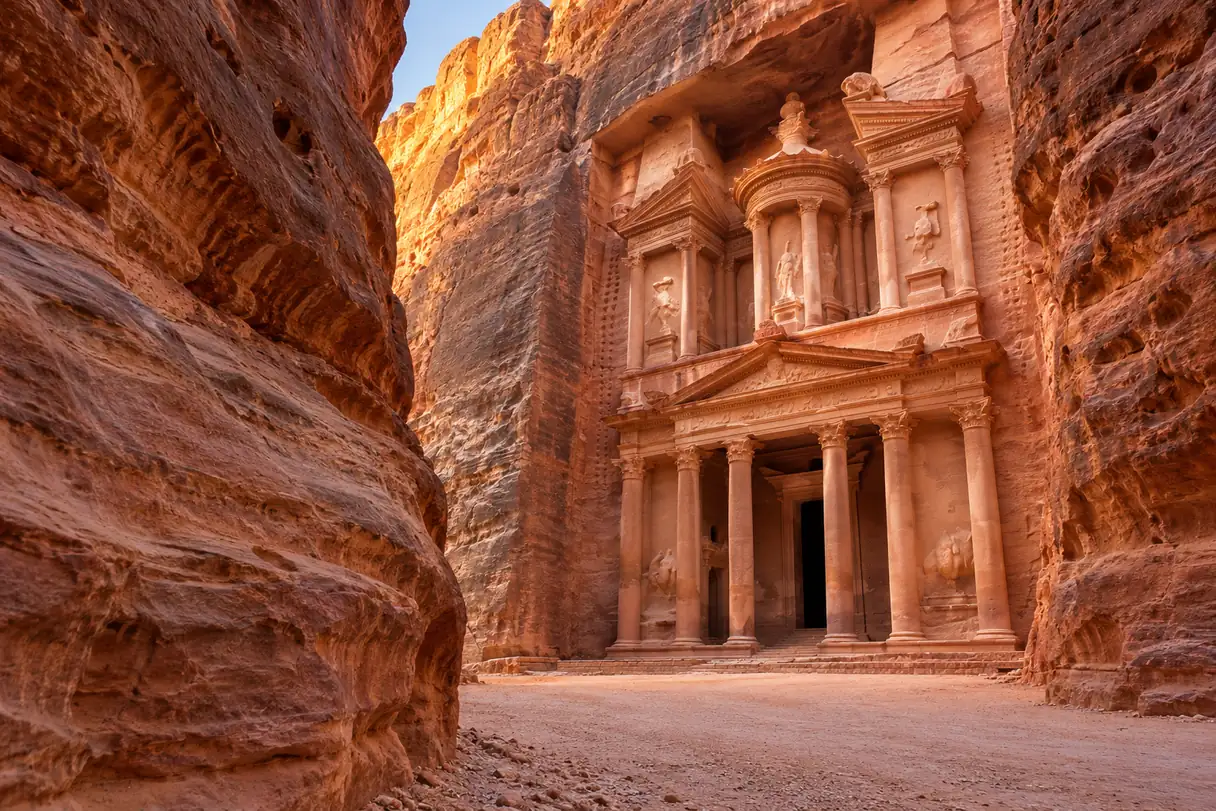
Compare the natural sandstone formations with the regular lines of the carved façades. The Treasury's columns and ornament seem to stand apart from the cliff, although they belong to it. Then look beyond this celebrated monument: the less spectacular traces of water management explain how a substantial city could function here.
Three details to keep.
- The Siq is a natural gorge extending for just over a kilometre.
- The Treasury's name comes from a treasure legend; the monument is understood as a mausoleum.
- Petra contains freestanding buildings as well as monuments carved into rock.
A place through time.
Petra prospers as the Nabataean capital.
Rome incorporates the Nabataean kingdom.
A major earthquake damages the city.
Petra joins the World Heritage List.
Follow the story further.
Explore the official history and interpretation below. For practical visitor details, use the organisation’s current information.
Explore Petra's official history ↗The YouTube link opens search results, not a selected or endorsed video. Images on this example site are generated artistic interpretations, not documentary photographs.