Overview
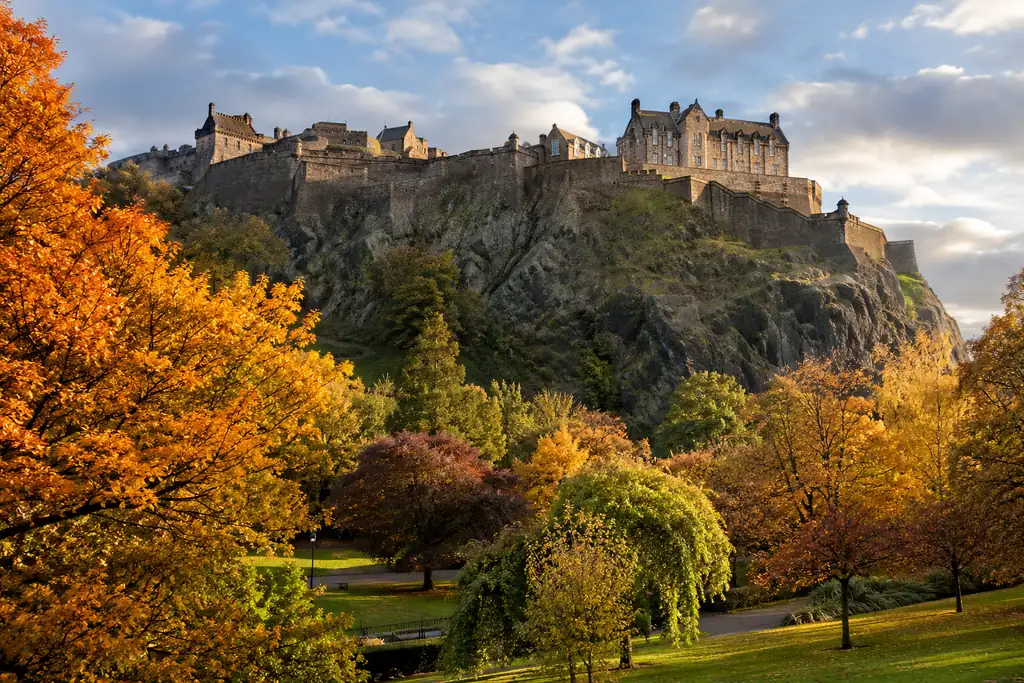
The rock offered a strong defensive position long before the surviving castle took shape; Iron Age people built a hill fort here. Later buildings gathered around royal life, worship and military service. The result is a layered complex, with intimate rooms set beside imposing batteries and ceremonial spaces.
Royal rooms and changing fortunes
David I built St Margaret's Chapel around 1130 in memory of his mother. James IV's Great Hall followed in 1511, while Mary Queen of Scots gave birth to James VI in the Royal Palace in 1566. Repeated conflict changed the defences, including the construction of the Half Moon Battery after the 1573 siege.
A roof worth looking up for
The Great Hall's timber roof rests on carved stone supports decorated with heads and symbols. It survives above a room that later became soldiers' barracks and a military hospital. Comparing that grand space with the small chapel shows the difference between royal ceremony and private devotion.
What to notice
Look closely at the chapel's original arches, then compare them with its later stained glass. In the Great Hall, follow the timber roof before examining the carvings beneath it. Across the complex, changes in scale and purpose reveal a castle repeatedly adapted rather than preserved at a single moment in time.
Three details to keep.
- St Margaret's Chapel is Edinburgh's oldest surviving building.
- The chapel was used to store gunpowder during the 1500s.
- The initials MAH above the Royal Palace entrance refer to Mary and Henry, Lord Darnley.
A place through time.
David I builds St Margaret's Chapel.
The Great Hall is completed for James IV.
James VI is born in the Royal Palace.
Cromwell's army captures the castle and converts the hall into barracks.
Follow the story further.
Explore the official history and interpretation below. For practical visitor details, use the organisation’s current information.
Read the official Edinburgh Castle history ↗The YouTube link opens search results, not a selected or endorsed video. Images on this example site are generated artistic interpretations, not documentary photographs.