Overview
The Great Wall is an extensive defensive system developed by successive Chinese states and empires. Walls form only part of it: watchtowers, passes, fortresses and connecting routes also belong to the story. Understanding the system requires thinking across landscapes and centuries, rather than imagining one uninterrupted construction project.
Many dynasties, many walls
Around 220 BC, Qin Shi Huang linked earlier fortifications into a broader defence system. Construction and adaptation continued through later periods, including the Ming dynasty of 1368–1644. Surviving sections therefore differ considerably. Rammed-earth remains and carefully built masonry record different circumstances, resources and approaches to protecting a frontier.
Design shaped by terrain
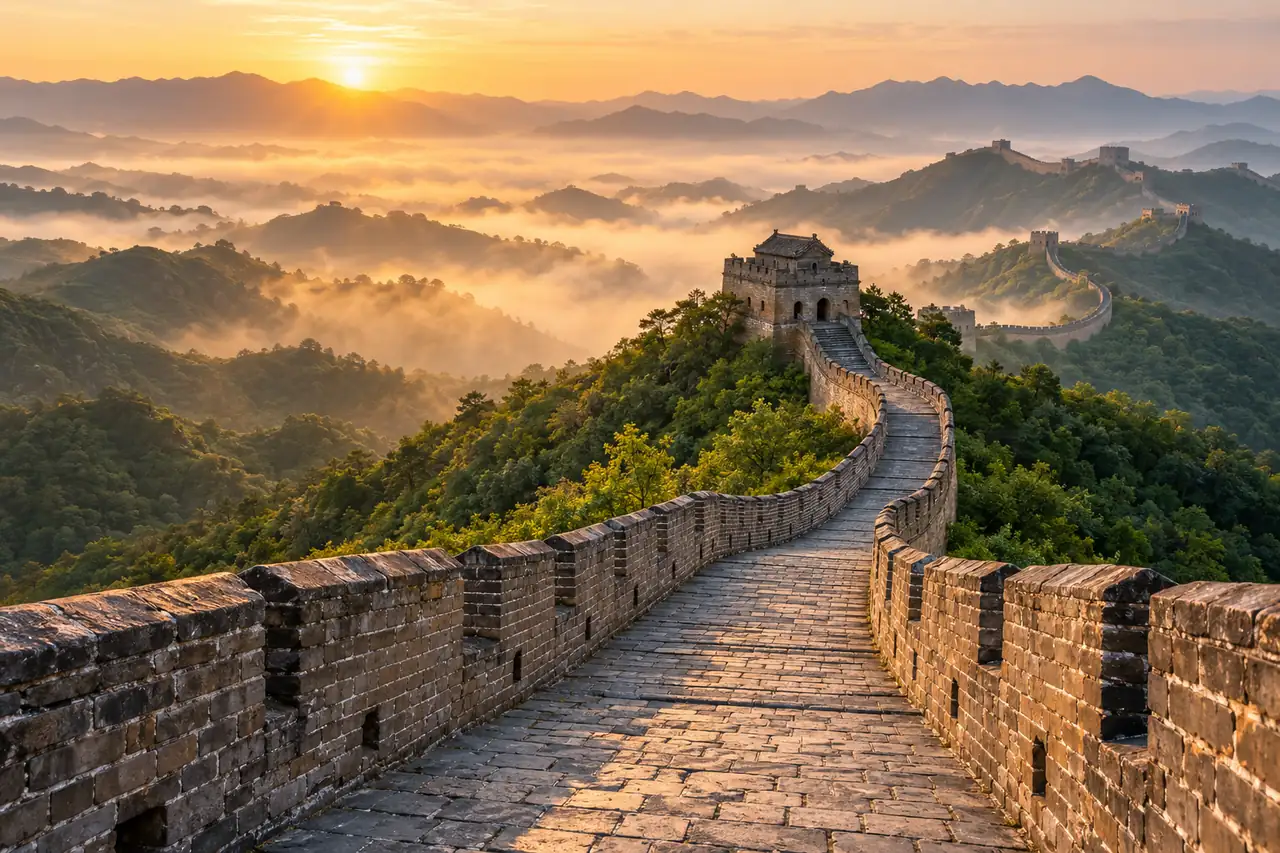
The wall's relationship with the ground is central to its character. Ridges, slopes and passes guide the eye and help explain the placement of defensive works. A close view reveals materials and construction; a wide view reveals how individual structures become part of a much larger landscape.
What to notice: scale and a persistent myth
Follow the line from tower to tower and compare that impression with the fine detail of a single section. Its scale is impressive without the familiar claim that it is visible from the Moon. NASA rejects that claim and explains that seeing the wall even from Earth orbit is difficult without powerful lenses. A striking photograph from space is not evidence of what an unaided eye would see.
Three details to keep.
- The Great Wall includes fortresses and passes as well as walls and towers.
- Its surviving structures represent multiple periods and construction methods.
- NASA confirms that the wall is not visible from the Moon.
A place through time.
Qin Shi Huang links earlier fortifications.
The Ming dynasty develops major sections of the defensive system.
The Great Wall joins the World Heritage List.
Follow the story further.
Explore the official history and interpretation below. For practical visitor details, use the organisation’s current information.
Explore UNESCO's Great Wall profile ↗Additional reference: NASA on viewing the Great Wall from space ↗
The YouTube link opens search results, not a selected or endorsed video. Images on this example site are generated artistic interpretations, not documentary photographs.