Overview
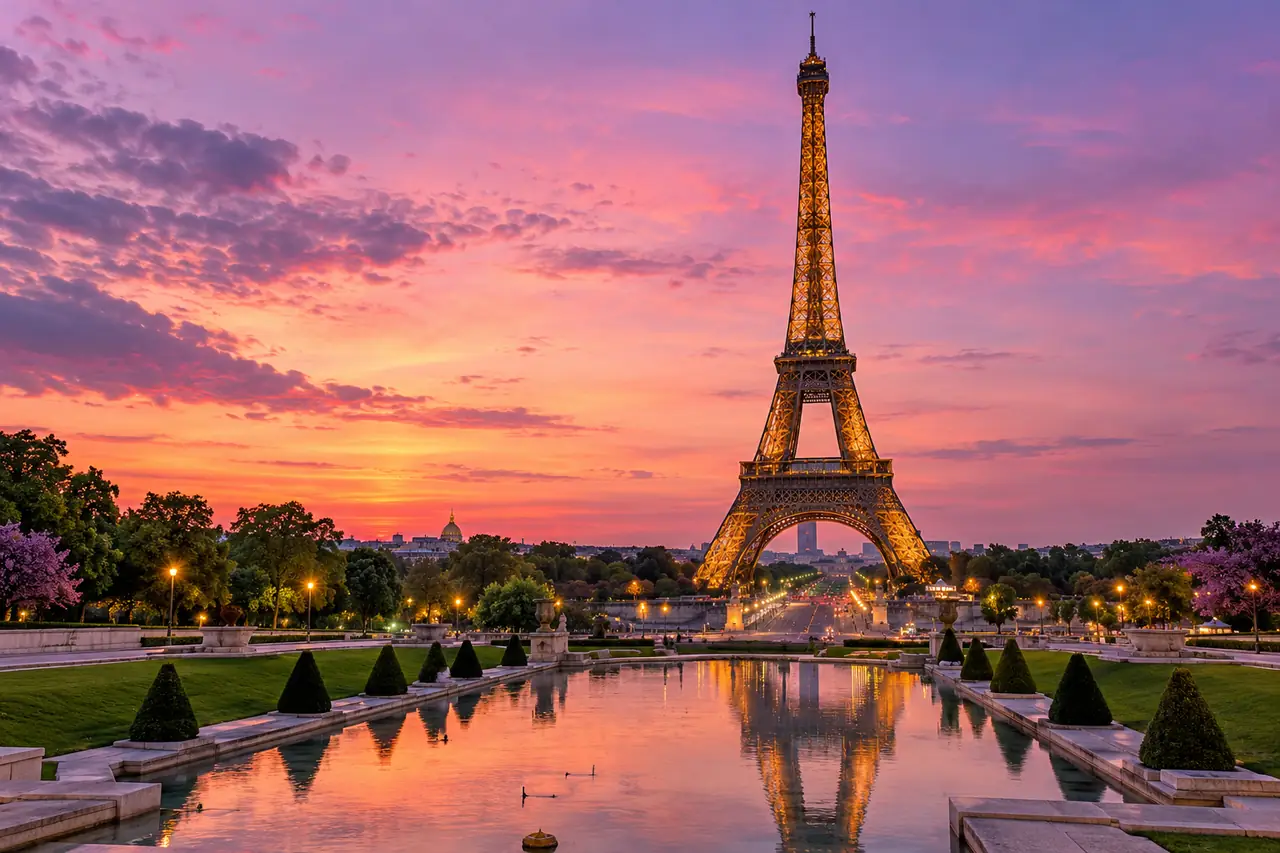
Built for the Paris World's Fair of 1889, the tower demonstrated the possibilities of large metal structures. Its four spreading legs narrow towards a single summit. Seen from a distance, the design seems simple; closer inspection reveals a dense system of beams, bracing and connections.
An idea becomes a landmark
Engineers Maurice Koechlin and Émile Nouguier developed the early concept within Gustave Eiffel's company, with architectural input from Stephen Sauvestre. Construction began in 1887 and was completed on 31 March 1889. The project faced outspoken criticism before becoming one of the fair's great attractions.
Precision in iron
The structure uses puddled iron, refined to reduce its carbon content. Components were prepared in workshops and assembled on site. Rivets held the pieces together; their contraction as they cooled helped tighten the joints. The achievement depended on accurate drawings and manufacture as much as dramatic work high above the ground.
What to notice
Follow a single leg upwards and watch the repeating geometry grow finer. The spaces between the metal are as visually important as the metal itself. The tower also became a platform for scientific work, especially wireless communication, helping give an initially temporary exhibition structure a lasting purpose.
Three details to keep.
- The tower contains 18,038 metal components and approximately 2.5 million rivets.
- Construction took two years, two months and five days.
- Its original concession was for 20 years; scientific and communications uses helped secure its future.
A place through time.
The early 300-metre tower concept is developed.
Construction starts on the Champ de Mars.
The first and second floors are completed.
The completed tower becomes a centrepiece of the World's Fair.
Follow the story further.
Explore the official history and interpretation below. For practical visitor details, use the organisation’s current information.
Explore the Eiffel Tower's official history ↗The YouTube link opens search results, not a selected or endorsed video. Images on this example site are generated artistic interpretations, not documentary photographs.