Overview
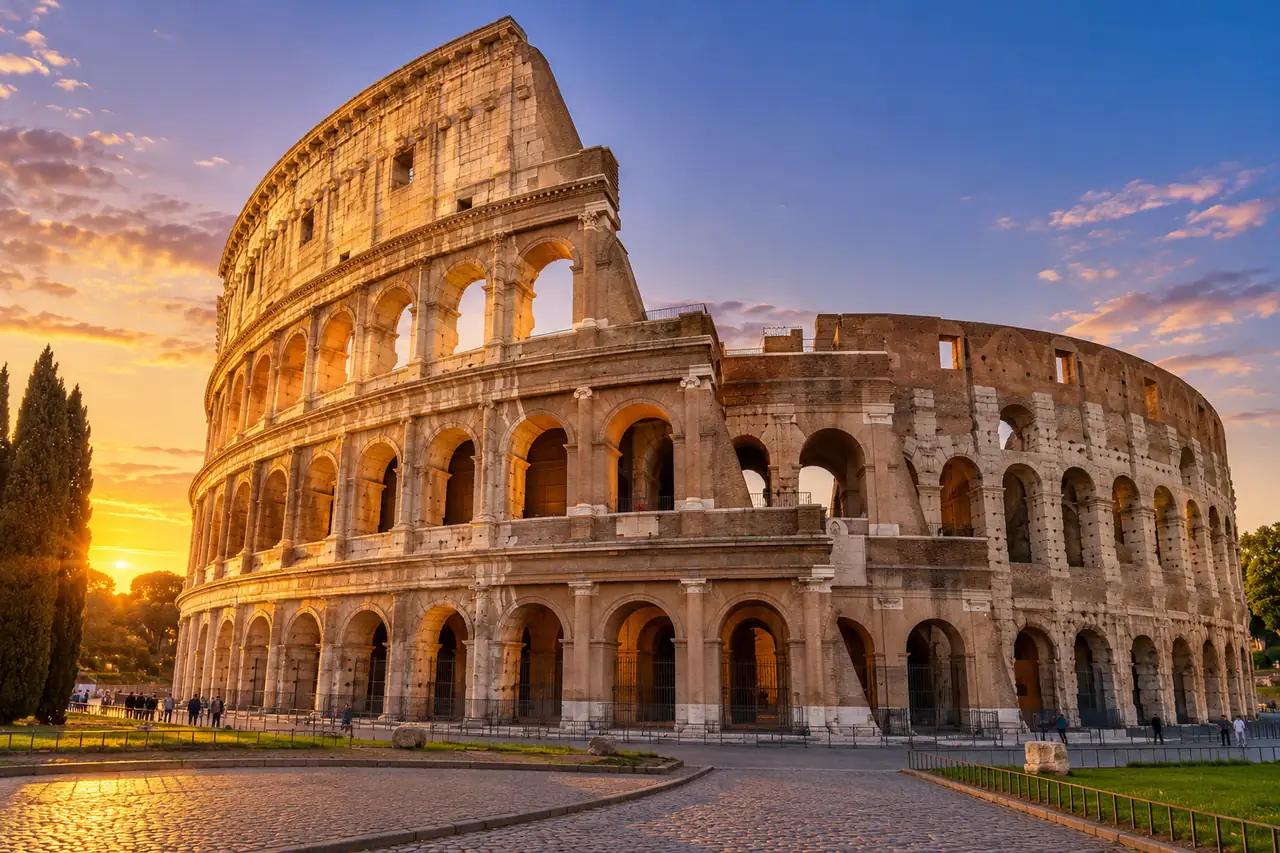
The Flavian Amphitheatre stands in the archaeological heart of Rome. Built under the Flavian emperors in the first century AD, it hosted gladiatorial combat and animal hunts. Its grandeur belongs beside a recognition of the violence staged here: architecture, public entertainment and imperial power were closely connected.
Beyond the opening spectacle
Emperor Titus inaugurated the amphitheatre in AD 80 with an extended programme of events. The building changed throughout antiquity and continued to acquire new uses afterwards. Medieval occupants created homes and workshops; stone was removed for other buildings. Excavation and conservation later turned attention towards understanding those successive lives.
The machinery below
The subterranean spaces supported the action above. Wooden arrangements used for the inauguration were later developed into masonry under Domitian. Hoists, platforms and trapdoors could bring animals, people and scenery onto the arena. The visible underground corridors therefore reveal infrastructure that spectators were never meant to see.
What to notice
Compare the repeated rhythm of the external arches with the tightly organised spaces inside. Imagine the missing arena floor covering the underground passages, separating spectacle from preparation. That change in viewpoint transforms the ruin: you begin to read it as a working building, with backstage labour supporting everything visible to its audience.
Three details to keep.
- The name Colosseum is associated with a colossal statue that once stood nearby.
- One Flavian lifting arrangement used 28 animal elevators operated by a combined team of 224 people.
- The monument's later history includes houses, craft workshops and the reuse of its stone.
A place through time.
The Flavian emperors build the amphitheatre.
Titus inaugurates the building.
Domitian's reign brings masonry development of the underground levels.
The archaeological park identifies the last documented event.
Follow the story further.
Explore the official history and interpretation below. For practical visitor details, use the organisation’s current information.
Explore the Colosseum Archaeological Park ↗The YouTube link opens search results, not a selected or endorsed video. Images on this example site are generated artistic interpretations, not documentary photographs.