Begin with the ground beneath it.
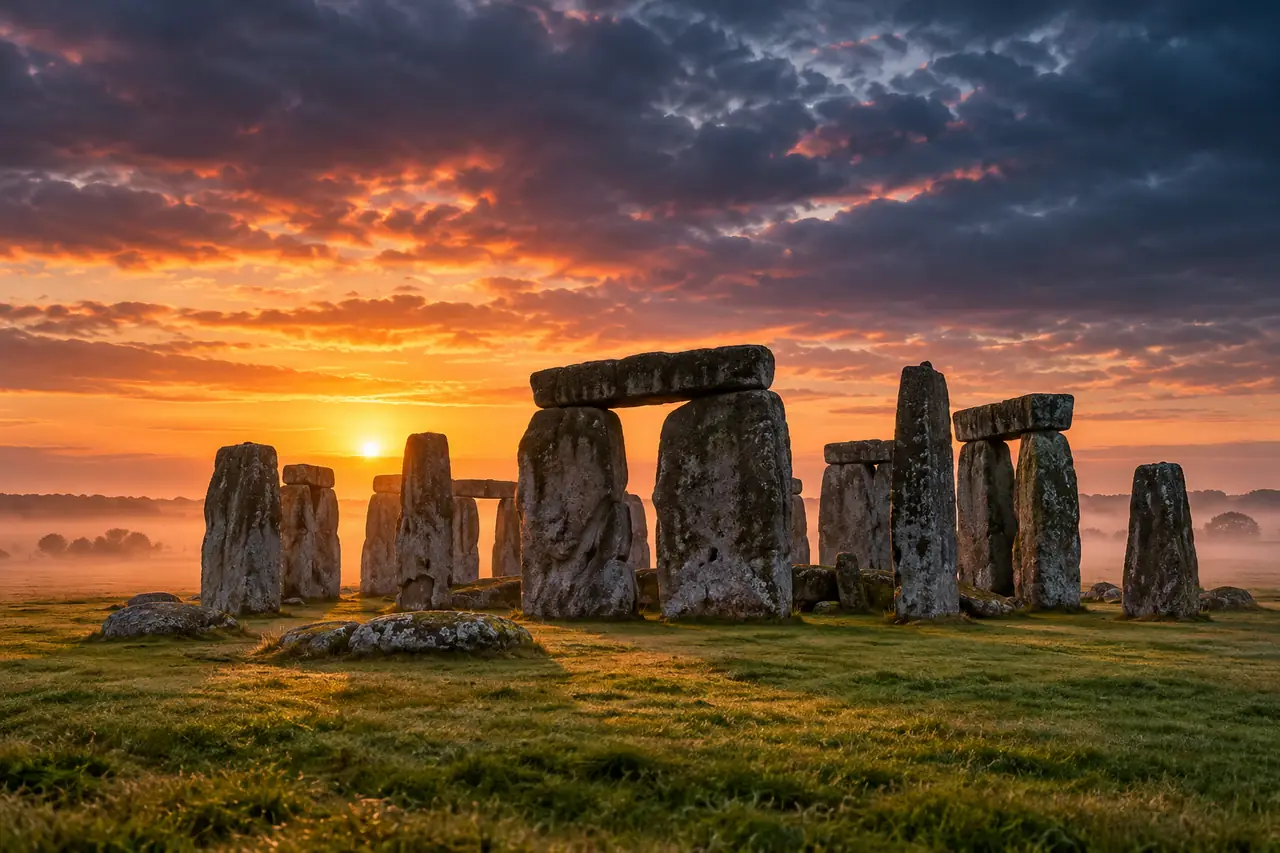
A landmark is never completely separate from its setting. A river crossing, a defensible rock, a ceremonial landscape or an approach through a narrow canyon can explain why a structure stands where it does. Start with the wider view before narrowing your attention to the familiar façade. At Stonehenge, the surrounding earthworks and burial monuments extend the story far beyond the stone circle. At Edinburgh Castle, the rock is part of the explanation for the stronghold above it.
Ask what problem it was solving.
Buildings do things. They carry traffic, express authority, shelter communities, commemorate people or organise ceremonial space. Tower Bridge becomes easier to understand when you picture the competing needs of road traffic and ships. Its moving road is the central idea, while the towers give the engineering a distinctive public face. Looking for purpose does not mean that every monument has one settled explanation. For prehistoric sites, uncertainty is often an essential part of the story.
Notice the joins.
Edges, joints, changes of material and additions can reveal a structure’s working life. A landmark may look like one complete object while containing many separate episodes. Ask which parts carry weight, which provide decoration and which may have been altered. Stonehenge’s lintels, Tower Bridge’s steel framework and Petra’s rock-cut façades offer very different answers to the question of how a place is made.
Leave room for another reading.
A useful visit does not require a final verdict. Look again from another angle. Read the interpretation offered by the organisation that cares for the site. Separate what you can observe from what you have inferred. The reward is a richer kind of attention: a place becomes a series of human decisions, and some of those decisions remain open to investigation.
Continue with the field guide.
These editorial reflections draw on the histories linked in our landmark profiles. Read the profiles for dates, architectural details and direct links to the organisations caring for the sites.