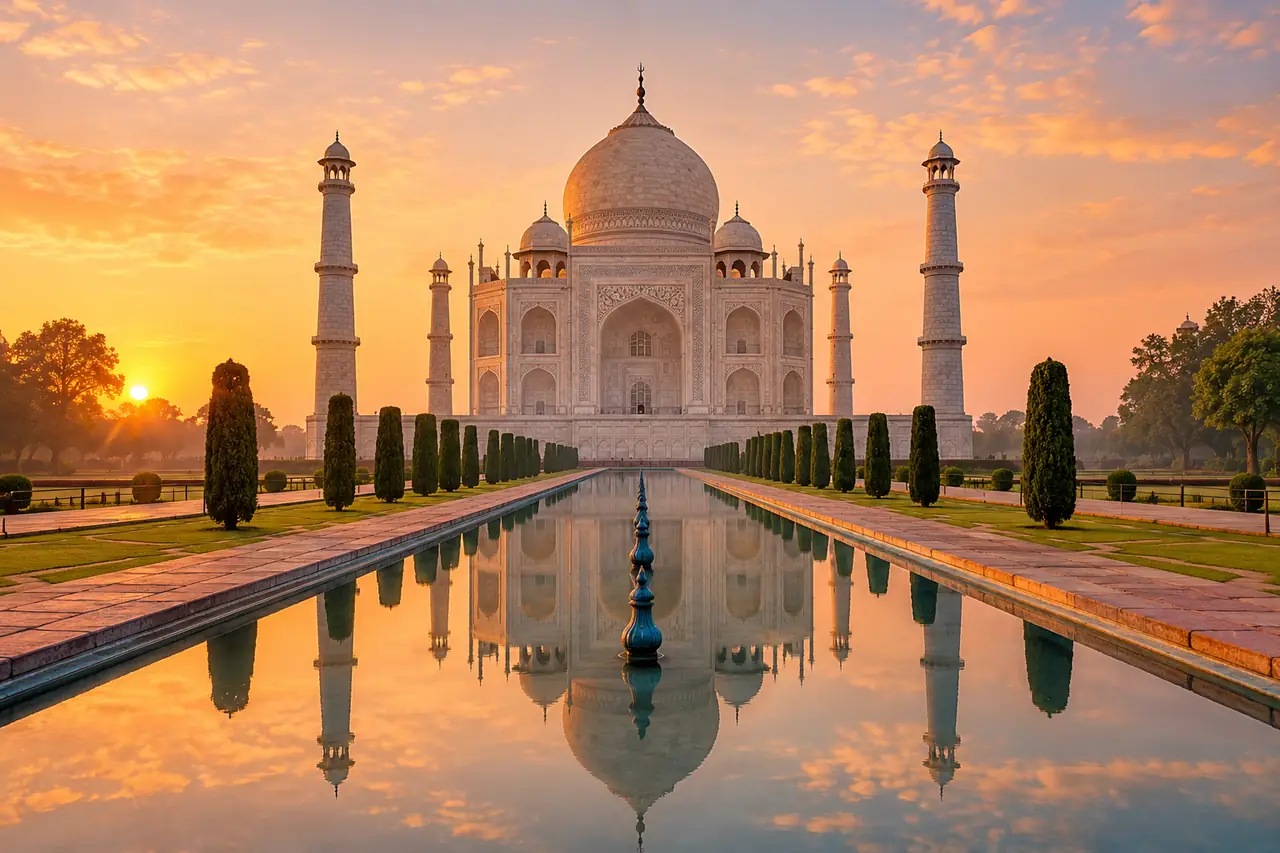
Stone is only part of the record.
A monument can preserve a name, express devotion, demonstrate power or become associated with events far beyond its original purpose. The Taj Mahal is a mausoleum and a carefully arranged architectural ensemble. The Colosseum is an ancient arena whose surviving fabric speaks to spectacle, engineering and the organisation of public life. Their meanings are not interchangeable, but both require more than an attractive image.
Read the arrangement.
Approaches, courtyards, gardens and routes through a site influence how it is encountered. At the Taj Mahal, the relationship between the central building and its surroundings is an important part of the composition. At Petra, the approach through the Siq shapes the encounter with the Treasury. Paying attention to the sequence of spaces can reveal an intention that a tightly cropped photograph loses.
Ask whose experience is visible.
Monuments often preserve the stories of patrons and rulers more clearly than those of labourers, craftspeople and everyday visitors. An attentive reading asks who made the place possible, who used it and who is absent from the most familiar account. The answers may be incomplete. Acknowledging those gaps produces a more honest history than filling them with an appealing story.
Keep curiosity and care together.
Famous places are also fragile physical environments. Their interpretation develops as research continues, while the work of conservation is ongoing. This journal’s profiles are starting points for exploration, with links to the organisations responsible for each site. They encourage a slower form of looking: notice the material, follow the sequence of spaces and leave with a better question than the one you brought.
Continue with the field guide.
These editorial reflections draw on the histories linked in our landmark profiles. Read the profiles for dates, architectural details and direct links to the organisations caring for the sites.